


AI Video Generator - Pixaflow
HITDEV AI
AI Video Generator - Pixaflow caught my attention because it aims at a very specific modern habit: turning a simple idea, image, or prompt into a short video without asking me to learn a full desktop editor. I reviewed it as an art and design app from HITDEV AI, and my overall impression is that it is best understood as a quick creative starting point rather than a complete replacement for a professional video suite. It is free to install, rated for Everyone, and its appeal is obvious if you want to experiment with AI-made clips for social posts, dance concepts, visual jokes, or mood pieces.
What makes this app interesting is not just the promise of generating video. The useful question is whether it helps me get from an idea to something shareable without too much friction. In that respect, Pixaflow can be enjoyable, but it also rewards a little patience. The quality of a result depends heavily on the source image, the wording of the request, and whether I treat the first generation as a draft instead of expecting a perfect finished clip.
Where users are most likely to get stuck
The first point of confusion is usually the difference between creating a video and finishing a video. An AI generator can produce the central visual movement, but that does not automatically mean the result has the exact timing, framing, expression, or atmosphere I imagined. If I approach Pixaflow expecting one tap to deliver a polished campaign asset, I am likely to be disappointed. If I use it to explore ideas quickly, its purpose becomes much clearer.
The app’s store summary focuses on viral videos and AI dance creation, so I found it most naturally suited to short, attention-grabbing concepts. A portrait that gains motion, a stylized character performing a simple routine, or a visual transformation can work better than a complicated story with several people, locations, and actions. AI video tools generally have more room to make mistakes when a request contains too many moving parts, and Pixaflow is easier to judge when the goal is deliberately narrow.
Another likely sticking point is input quality. A blurry, tightly cropped, poorly lit, or oddly posed image gives the generator less visual information to work with. Even when the app accepts the file, the output may look less convincing because the subject is difficult to separate from the background. I get better results by choosing a clear image with one obvious main subject and enough space around it for movement.
Related News

Why WhatsApp Messenger Still Makes Everyday Communication Feel Easy

Jurassic World: The Game Is the Better Dino Tycoon for Strategic Players

Threads in Real Life: Who Should Join, Lurk, or Leave

How SHEIN Turned Shopping Into an Endless Content Feed

How to Make Fortnite Feel Smarter on Mobile

Should You Switch to Microsoft Outlook on Mobile?
The most useful mindset is to treat each generation as a visual sketch. I look for a strong moment, a good pose, or an interesting movement, then decide whether it is worth refining. This saves time and prevents me from endlessly trying to repair a weak starting image with increasingly complicated prompts.
Prompt wording can also become a source of frustration. Vague instructions such as “make this amazing” do not give the app much direction. I prefer describing the subject, the action, and the mood in plain language. For example, a request built around “a person making a smooth, upbeat dance move in a bright studio” is easier to evaluate than a long paragraph filled with unrelated visual ideas. Keeping the request focused makes it simpler to identify whether a problem came from the prompt or from the source material.
Why a simple first attempt matters
My practical advice is to begin with the smallest version of the idea. Use one subject, one action, and one visual mood. Once that works, I can try a different image or a more expressive instruction. This staged approach is more efficient than changing everything at once because it reveals what actually improved the result.
Gallery
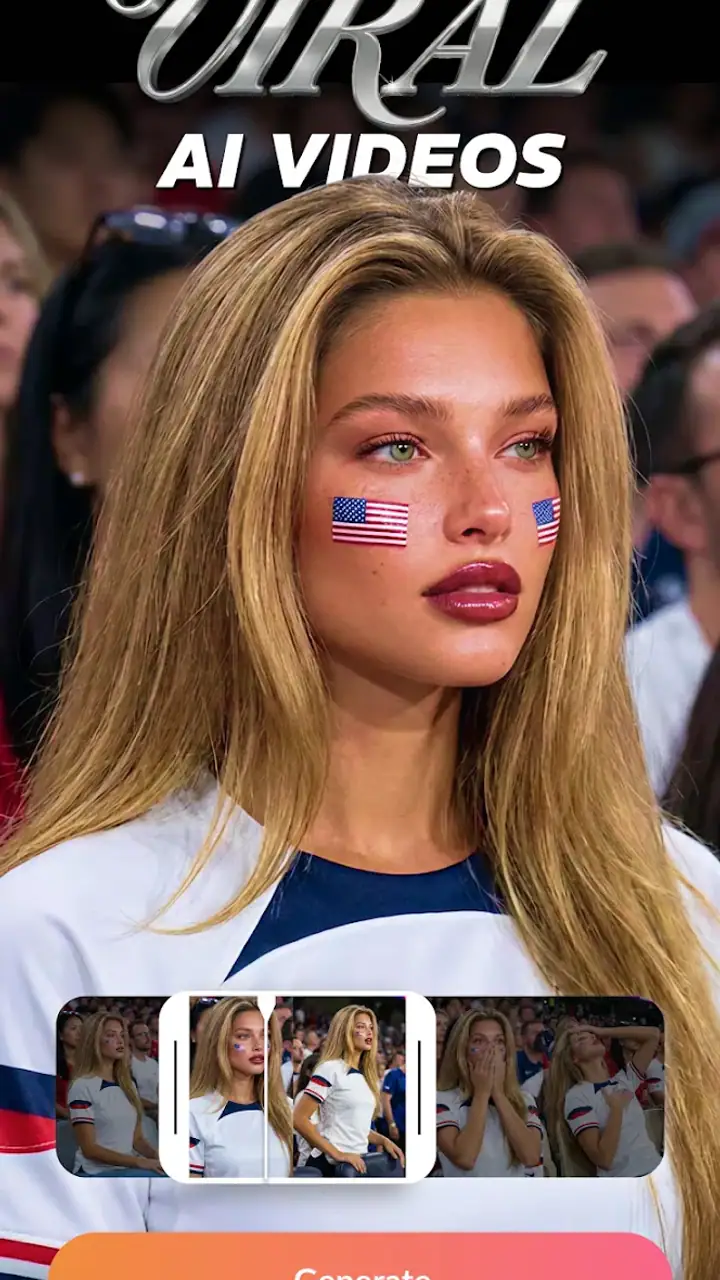
For dance-oriented clips, the pose in the original image matters more than I initially expected. A centered subject with visible limbs gives the animation a clearer foundation. A person hidden behind furniture, cut off at the knees, or turned sharply away from the camera leaves less room for a natural-looking movement. This is one of the less obvious trade-offs: a visually dramatic still image is not always the best image for motion.
Setup checks before creating a clip
Pixaflow is available as a free app, but free access should not be confused with unlimited use of every possible creation option. The app includes in-app purchases ranging from around six dollars to around forty dollars per item. I would check the purchase screen carefully before confirming anything, especially if I am testing the app casually or letting a younger family member explore it. The age rating is Everyone, but purchase decisions still deserve adult attention.
The release information identifies the app as compatible with operating systems from version 7.1 onward, while the current version is 1.0.6. That makes it accessible to a broad range of devices, although compatibility alone does not guarantee an equally smooth experience on every phone or tablet. Video generation can be demanding in ways that ordinary drawing or photo apps are not, so I would keep the device updated where possible and close unnecessary apps before starting a longer creation.
Before uploading an image, I make three quick checks. First, I confirm that the picture is actually stored on the device and can be opened normally. Second, I check that the subject is visible at a useful size rather than occupying only a tiny part of the frame. Third, I decide what I want the motion to communicate. These checks sound basic, but they prevent me from blaming the generator for an unsuitable input.
It is also worth preparing a backup idea. If my first concept depends on a very specific pose or a crowded scene, I keep a simpler portrait or object image ready. This is especially helpful when I am making content on a deadline. Instead of repeatedly forcing a difficult source image to work, I can switch to a clean alternative and see whether the issue is tied to the original material.
A setup routine that reduces wasted attempts
Choose a clear image with one main subject and a reasonably uncluttered background.
Write one short instruction describing the action and overall mood.
Review the preview with attention to the subject’s face, hands, edges, and background.
Change only one major element on the next attempt so the improvement is easy to judge.
This routine is more valuable than adding decorative words to a prompt. It turns the app into a small creative experiment: I can compare a different source image, a different action, or a different mood without losing track of what changed. For an art and design app, that makes Pixaflow more useful as an idea laboratory than as a one-shot content machine.
The app has a 4.5 average from around six thousand ratings and has passed one hundred thousand installs, which suggests that the concept has found an audience. I would still interpret those figures carefully. They indicate interest and a generally positive reception, but they do not tell me whether every type of device, image, or creative request will behave identically. My own decision would depend more on whether the app’s quick, experimental workflow matches what I need.
Recovering when a workflow goes wrong
When a generation fails, freezes, or produces an unusable result, I avoid immediately repeating the exact same action. First I return to the simplest possible test: a different clear image and a short, uncomplicated instruction. If that succeeds, the original problem was probably connected to the source or request rather than the entire workflow. This kind of isolation is much more useful than making several changes at once.
If an upload does not behave as expected, I check the image outside the app by opening it in the device gallery. A file that appears normal in one place can still be incomplete, unusually large, or saved in a format that causes trouble elsewhere. Re-saving a copy through the phone’s standard image tools can sometimes create a cleaner input without changing the creative idea. I would also avoid switching repeatedly between apps during an upload or generation, since interruptions can make it harder to tell whether the process completed.
For a result that looks distorted, I simplify the requested movement. Instead of asking for a full-body dance sequence with a dramatic camera move and a changing background, I try one controlled action first. This is a concrete workflow improvement because it separates motion complexity from visual style. Once the subject moves acceptably, I can explore a more ambitious direction.
There is another useful recovery technique: change the image before changing the wording. People often keep rewriting the prompt when the real weakness is the photograph. If the subject is cut off, poorly lit, or surrounded by confusing details, a better image can produce a larger improvement than several new descriptions. I found this particularly important for dance-style content, where body position and visible space affect the result.
When the output is almost right, I save the successful version before experimenting again. AI workflows can be unpredictable, and a later attempt is not automatically better. Keeping the best draft gives me a safe reference and lets me compare changes honestly. I also prefer creating a small set of focused variations rather than generating many random ones, because a smaller selection is easier to edit and choose from later.
Reading the result instead of only judging it
I inspect the clip in stages. First I look at the opening moment: does the subject begin in a believable position? Then I watch the central action: does the movement support the idea, or does it distract from it? Finally I check the ending: does it stop at a useful point, or would it need trimming before sharing? This method helps me decide whether the clip needs a new generation or simply a little editing in another tool.
Pixaflow is strongest when I accept that generation and editing are separate jobs. For a quick social post, I may only need a good short segment. For a more carefully timed video, I would export or save the useful result and finish the pacing, captions, audio, or sequencing elsewhere. That is not necessarily a weakness; it is a realistic division of labor. The app handles the imaginative motion, while a conventional editor handles precise assembly.
When the app is not the cause
Not every failed result points to a defect in Pixaflow. A weak network connection, limited free storage, background battery restrictions, or an overloaded device can interrupt cloud-dependent creative processes or make them feel unreliable. I would check the basics before uninstalling the app: stable connectivity, enough storage for generated media, and a device that is not already struggling with several demanding tasks.
Timing can matter too. If a generation seems slow, repeatedly tapping the creation control may create confusion about how many requests were started. I prefer waiting for the current action to resolve, then checking the available result before trying again. This is especially important when purchases may be involved, because accidental repeated actions are avoidable with a slower, more deliberate workflow.
Storage is an easy issue to overlook. Generated videos can take more room than a single still image, and keeping many near-identical attempts can quietly fill a device. I periodically remove failed drafts and keep only the versions I might actually use. This also makes it easier to find the successful clip when I want to share it.
Account or purchase prompts deserve a careful pause. Since the app is free to install but offers paid items, I would read each screen rather than assuming that every button means “continue for free.” If I am evaluating the app for a child, I would handle purchases myself and explain that the creative experiment can be stopped without buying anything. This keeps the trial focused on whether the core experience is useful.
Privacy also deserves ordinary common sense when working with images. I would avoid uploading sensitive personal photographs, private documents, or pictures of people who have not agreed to be used in an AI experiment. A public-facing creative app is better suited to material I am comfortable processing for that purpose. This is not a criticism unique to Pixaflow; it is a sensible boundary for any image-to-video tool.
Who benefits most from this workflow
I can see Pixaflow working well for a casual creator who wants a quick visual for a message, a social post, or a personal project. It is also appealing to someone who enjoys testing concepts without learning keyframes, masks, or complex timelines. A small business owner could use it to explore several visual directions before deciding what deserves a more polished production, provided the final result meets the project’s quality needs.
It is less suitable for a filmmaker who needs exact choreography, repeatable character movement, detailed shot control, or reliable continuity across multiple scenes. A conventional editor is better for timing and assembly, while a more specialized production tool may be preferable when consistency matters more than speed. I would also skip Pixaflow as my main solution if I need advanced sound mixing, precise typography, or a carefully controlled brand style.
Compared with ordinary photo editors, Pixaflow offers a more surprising route from still image to motion, but it gives me less manual control over every frame. Compared with full video editors, it is quicker to start and easier for experimentation, but weaker for detailed finishing. That middle position is the key to understanding it: it is not trying to be a complete studio, and I get the best value when I use it before, beside, or instead of a heavier editor for small projects.
My practical verdict after using Pixaflow
AI Video Generator - Pixaflow is a worthwhile free download for people who want to turn simple visual ideas into short AI-assisted clips, particularly dance and social-style concepts. HITDEV AI has placed the emphasis on immediacy, and I appreciate that the app can make creative experimentation feel less technical than traditional video production. The strongest results come from a clean source image, a focused request, and a willingness to make several thoughtful variations.
Its limitations are just as important. The app cannot remove the need for judgment, and it should not be treated as a guarantee of perfect movement or professional consistency. Difficult images, crowded instructions, device limitations, and interrupted workflows can all make the experience feel less smooth. The in-app purchase range also means I would examine the available options carefully before spending money, especially if I am only curious about the concept.
For an everyday example, imagine I have a well-lit portrait and want a playful clip for a friend’s birthday message. I would choose that image, ask for one simple upbeat movement, review the result, and keep the best short version. If the hands or background look strange, I would try a clearer portrait before rewriting the entire idea. After that, I would use a normal editor if I wanted text, music, or a precise ending. That workflow plays to Pixaflow’s strengths without asking it to do everything.
My recommendation is therefore conditional but positive. Try it if you enjoy visual experiments, need quick concept videos, or want a gentler entry into AI video creation. Skip it as your only tool if your work depends on exact control, predictable continuity, or a finished production pipeline. Used with realistic expectations, Pixaflow is a fun creative shortcut and a useful first draft machine, not a substitute for every tool that comes after it.
FAQs for AI Video Generator - Pixaflow
What is AI Video Generator - Pixaflow, and what can I use it for?
AI Video Generator - Pixaflow is designed to help users create short videos from written prompts, images, or creative ideas without requiring advanced editing experience. It can be useful for social media posts, promotional clips, presentations, storytelling, and experimenting with AI-generated visuals. The available tools, styles, export options, and results may vary depending on the app version and selected plan.
Is AI Video Generator - Pixaflow free to download and use?
The app may be available to download at no initial cost, but some features can require in-app purchases, a subscription, credits, or premium access. Before creating a large number of videos, check the pricing page and trial conditions carefully. Pay attention to renewal terms, generation limits, export restrictions, and whether the free version adds watermarks or limits video quality.
Does Pixaflow require an internet connection to generate videos?
Yes, users should generally expect to need a stable internet connection when using AI video generation features. The processing is typically performed through online servers rather than entirely on the phone, so generation speed can depend on your connection, server demand, and the complexity of the request. Offline access may be limited to viewing saved projects or exported videos.
How good are the videos generated by AI Video Generator - Pixaflow?
The quality can be impressive for concept videos, animated scenes, visual experiments, and short social content, but results are not always perfectly consistent. Characters, text, hands, motion, and details may occasionally appear unusual or change between frames. Clear prompts and suitable source images usually produce better results, although users should still review every generated clip before publishing or using it commercially.
Are videos created with Pixaflow safe to publish or use commercially?
You should review Pixaflow’s current terms of service, copyright rules, privacy policy, and subscription conditions before using generated content for business or monetized projects. AI-generated material can raise questions involving trademarks, recognizable people, copyrighted styles, music, and source images. Avoid uploading private or sensitive material unless you understand how it is processed, stored, and potentially used by the service.
Pros
- Creates videos from text prompts with minimal editing skills.
- Offers quick visual experimentation for social media content.
- AI-generated scenes can help turn ideas into rough storyboards.
- Simple interface makes the main tools easy to find.
- Useful for creating short promotional or creative video concepts.
Cons
- Results may vary noticeably depending on the wording of each prompt.
- Some exports or advanced tools may require a paid subscription.
- Generated characters and objects can look inconsistent between scenes.
- Video generation may take time
- especially for complex requests.
- Privacy terms should be checked before uploading personal or business content.


